Mould: Rashes, Eczema & Itching
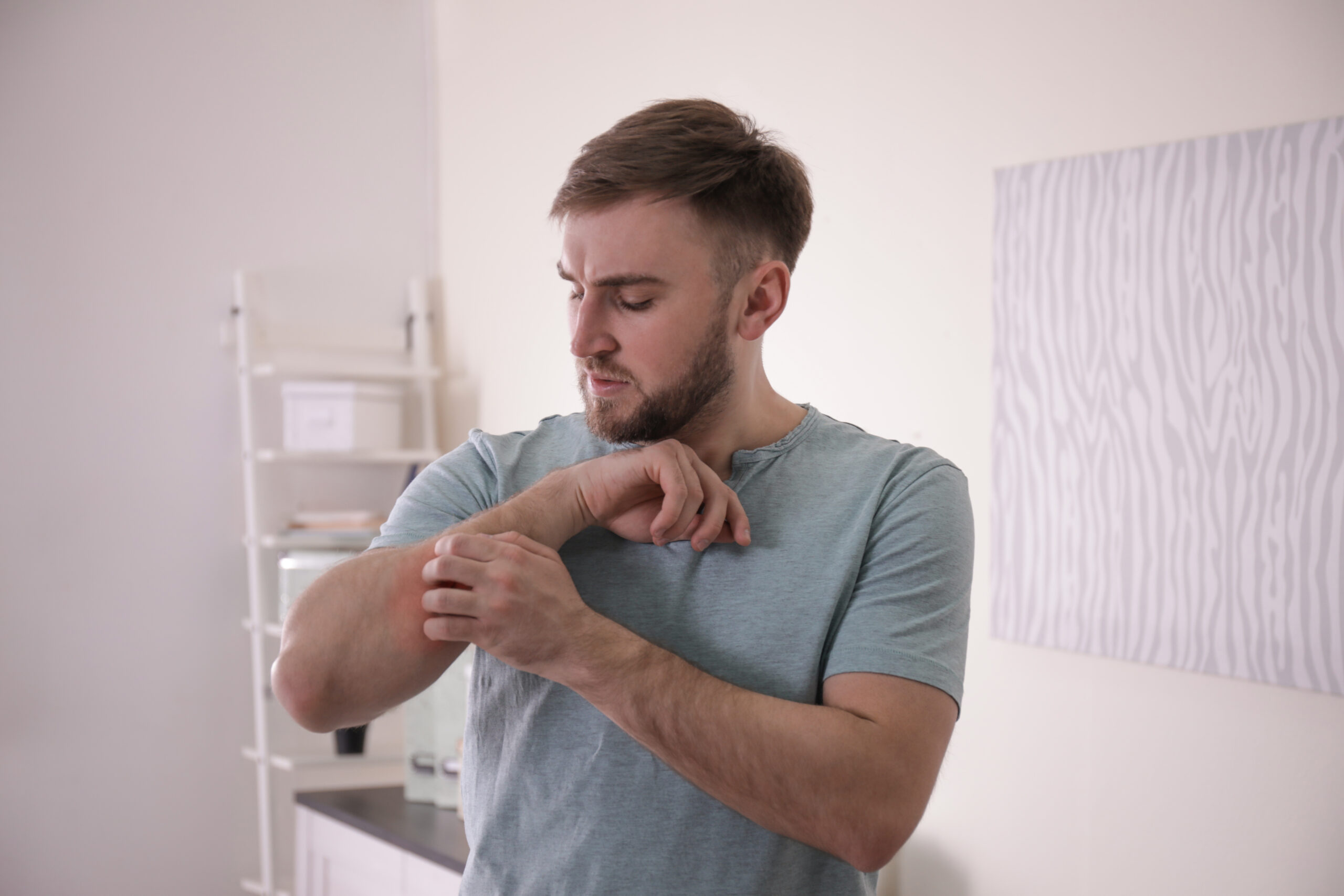
Skin rashes, eczema, and itching are among the most common symptoms linked to mould exposure.
Mould and its toxins (mycotoxins) can trigger inflammation, allergic reactions, and immune dysregulation that show up on the skin — even when the problem starts in your environment.
If you have chronic or recurring skin issues that resist treatment, it’s worth checking whether mould might be part of the cause.
Key takeaway:
Mould exposure can cause a huge range of skin problems. If you’re struggling with stubborn skin problems, you should consider ruling out mould as an underlying cause. If you’re dealing with a lot of itching, your liver may well be struggling with an overload of mould toxins and it’s time to get tested.
How Mould Affects the Skin
Key takeaway:
Mould exposure can irritate the skin directly or indirectly through immune, inflammatory, and detox pathways.
There are two main contributing factors linking mould to skin reactions:
- Immune activation & dysregulation: mycotoxins trigger mast cells to release inflammatory mediators like histamine, which results in skin issues like itching, hives, redness, or eczema flares, similar to seasonal allergies. The immune system becomes over reactive leading to an increase in sensitivity, increasing the chances of skin reactions and creating a chronic, vicious cycle of inflammation.
- Damage to the gut lining: which reduces the production of DAO (diamine oxidase), an enzyme that breaks down histamine, resulting in increasing levels of histamine and skin irritation.
Common Mould-Related Skin Symptoms
Key takeaway:
Skin symptoms from mould exposure can appear in many forms — from eczema to hives and intense itching.
People exposed to indoor mould often report:
- Distinctive ice pick or lightning bolt pains
- Frequent static shocks
- Persistent rashes, eczema, or itching
- Hives or red, raised bumps
- Flushing, burning, crawling, or peeling skin
- Rosacea or psoriasis-like inflammation
- Slow healing and easy bruising
- Frequent infections or yeast/fungal overgrowth (such as toenail fungus)
- Dermatographia (skin that stays red or white after scratching)
- Crawling or tingling sensations, static shocks, or skin hypersensitivity
- Raynaud’s-type changes (cold, pale, or bluish fingers and toes)
- Hypersensitivity or touch sensitivity (bothered by seams or tags on clothing) or sensitivity to light
- Erythema nodosum
These reactions can come and go, shift locations, or worsen in damp buildings — a strong clue that mould may be involved.
Mould Eczema and Chronic Itching
Key takeaway:
Mould can aggravate eczema and lead to stubborn skin that’s hard to keep under control.
In people with atopic dermatitis (eczema), mould exposure often drives:
- Increased histamine levels → more inflammation and itching
- Barrier dysfunction → dry, cracked skin prone to infection
- Immune activation → flare-ups that become difficult to manage
When to Rule Out Mould
Key takeaway:
Stubborn skin conditions and distinctive mould symptoms are a giveaway that you need to rule out mould.
If you experience any of the following, it’s time to rule out mould:
- Distinctive ice pick or lightning bolt pains
- Frequent static shocks
- Stubborn skin conditions that won’t clear up or keep returning
- A lot of itching, especially if it’s abdominal or wide spread
Also be on the lookout if:
- Your symptoms seem related to your physical location
- You also experience fatigue, sinus problems, brain fog, or mood issues
- You know you’ve been in water damaged or mouldy buildings now or even in the past
Take this Mould Illness Questionnaire to assess your risk.
Why Itching Is a Particular Concern
Key takeaway:
In natural medicine, itching is considered a sign of liver overload. This could be a tell tale sign that you have mould toxicity.
If you’re experiencing abdominal, widespread, or relentless itching, it’s definitely time to do further investigation. In natural medicine and specifically amongst mould practitioners, itching is a warning sign that the liver needs support.
It could be a tell-tale sign that you have mould toxicity and your body is struggling to eliminate the toxins effectively. When detox is impaired, mycotoxins can keep accumulating in the body and contributing to more and more health problems.
It’s easy to get tested to rule out mould – you can find out more in our blog post Can You Get Tested for Mould Exposure?
Taking the Next Step
Key takeaway:
Experiencing symptoms of mould illness can be concerning, but support is available.
It’s completely understandable to feel worried if you’re experiencing any of the symptoms above. Mould illness is complex, but there are practical steps you can take to identify exposure, support your body, and begin recovery.
If you want to learn more, you can download our free ebook Is Mould Making You Unwell?, or contact us directly and we’ll help you get the help you need.