Can You Get Tested for Mould Exposure?
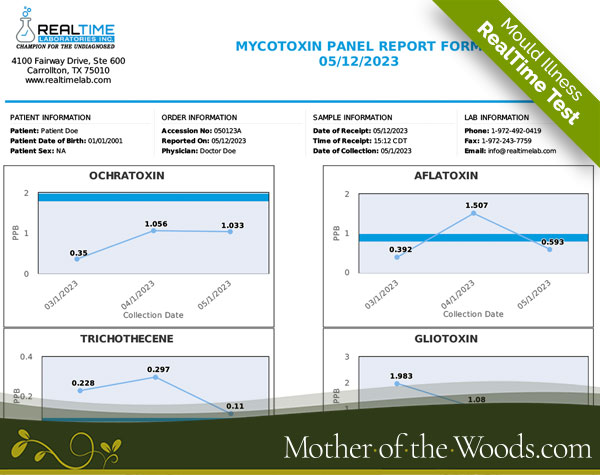
Yes - you can get tested for mould exposure, but not through standard medical services.
There are a range of options each with its own strengths and weaknesses. The most common tests are Visual Contrast Sensitivity (VCS) screening, urinary mycotoxin tests, and serum blood tests.
This guide compares the pros and cons, compares leading labs (RealTime vs Mosaic DX), and explores when testing makes sense.
Can You Get Tested for Mould Exposure?
Key takeaway:
Yes – but standard medical tests only detect mould allergy, not chronic mycotoxin illness.
While your GP can offer an allergy test, it won’t measure toxin load. For mould toxicity, functional testing available includes:
- VCS testing – a free visual screening for general toxicity
- Urinary mycotoxin testing – the most reliable method to confirm mould toxicity
- Serum blood testing – an alternative method to consider in the case of a false negative urine test
- CIRS testing – a range of tests developed by Dr Ritchie Shoemaker
Why Testing Matters – and Its Limits
Key takeaway:
Testing brings clarity, but results must be interpreted in context.
Testing can help you:
- Confirm whether mould contributes to your symptoms
- Provide objective proof for friends and family
- Identify which mycotoxins are present for targeted detox support
- Track recovery progress over time
What to Keep in Mind
These tests are not yet offered through mainstream health services. GP allergy panels only show immune reactions to mould spores, they do not measure mycotoxins at all – these are two different things entirely
Mould illness can impair detox pathways, leading to false negatives – longstanding mould toxicity can shut down detox pathways, effectively preventing you from eliminating toxins from your body
Bottom line: Testing is a useful tool, not a guarantee. It works best alongside symptom history, exposure details, and practitioner interpretation.
VCS Testing (Visual Contrast Sensitivity)
Key takeaway:
A quick, free at-home screening for toxicity – but not mould-specific.
What is the VCS Test?
The VCS test measures your ability to distinguish subtle visual contrasts (tiny lines spaced close together). Failing the test suggests some level of neurological inflammation, of which toxins (including mould) are one cause.
How it Works
You take the test online or via mobile, under controlled lighting conditions. If you fail, it means you may have a toxicity burden – though not necessarily from mould.
Pros
- Free test
- Instantly accessible on most mobile phones
- May flag early neurological effects of toxicity
Cons
- Not specific to mould exposure
- Requires correct lighting and screen calibration
- Some with mould illness pass – it’s not foolproof
- Personal insight: I don’t usually rely on VCS as it can be difficult to calibrate. I prefer to go straight to mycotoxin testing. However, if you’d like to try it as a no-cost first step, you can access it here.
- If you fail the VCS but pass a mycotoxin test, I can help you interpret results and identify other possible sources of toxicity.
Urinary Mycotoxin Testing: The Most Reliable Test
Key takeaway:
The most reliable and actionable functional test for mould exposure.
How Urinary Mycotoxin Testing Works
This is a simple at-home urine collection with results in about two weeks. Results reveal:
- Whether mycotoxins are currently being excreted in urine
- Which mycotoxins are present (to tailor detox support)
- Whether your detox plan is working over time
Important caveat: Because mould illness often reduces detox capacity, some people with true mould exposure may get false-negative results. That’s why negative results should not be taken as absolute proof of absence. In this case, you can opt for a blood test if you still really feel like you need confirmation.
When to Consider Testing
You should consider a urinary mycotoxin test if you:
- You have symptoms consistent with mould illness – take the symptom questionnaire here to find out
- Spend time in humid or water-damaged environments
- Previously lived or worked in mouldy buildings (even years ago – mycotoxins may linger)
- Have a diagnosis such as ME/CFS or fibromyalgia
- Are highly sensitive to smells, chemicals, light, noise, or supplements
- Want proof to help convince family or friends that you’re suffering from mould illness
What’s Involved?
The process is simple:
- Order a kit (direct from the lab or through a practitioner)
- Collect a urine sample at home
- Seal and return to the lab by courier
- Receive your results in around 2 weeks
Choosing a Lab: RealTime vs Mosaic DX
Key takeaway:
Both are excellent, but test for slightly different mycotoxins.
RealTime Labs
- Best starting point for most clients
- Offers a broad spectrum of mycotoxin detection
Access Realtime Labs urinary mycotoxin test here
Mosaic DX (formerly Great Plains)
- Detects mycophenolic acid, a marker of ongoing exposure
- Useful as a follow-up or to capture exposures that RealTime may miss
Access Mosaic DX urinary mycotoxin test here
Tip: Because each lab detects different toxins, using both at different stages gives a fuller picture of exposure.
A Back Up Option: Mycotoxin Antibody Testing
Key takeaway:
Measures immune response to mycotoxins – useful when urine results are unclear.
Although this is a blood test, it is a different test to the blood test offered by GPs. Standard tests measure antibodies to mould spores, where a mycotoxin antibody test measures antibodies specifically to mycotoxins. Spores and mycotoxins are two completely different things, so if we want to identify mould illness, aka mould toxicity, caused by mycotoxins, we need to measure reactions to mycotoxins, not spores.
Pros
- Detects exposure even when detox is impaired
- May help distinguish past vs current exposure
Cons
- Blood draw required (less convenient as you’ll need to pay for a private phlebotomist)
- Antibodies can stay positive for up to six months after toxins are eliminated from the body, making it less useful for signalling when you’ve cleared mould
- Use this where there are clear symptoms and exposure, but urine tests are negative
Contact me to arrange mycotoxin antibody testing.
What About Shoemaker Testing for CIRS?
Key takeaway:
These can be difficult to access, costly, and aren’t necessary to get well.
Dr Ritchie Shoemaker developed a range of biomarkers to diagnose Chronic Inflammatory Response Syndrome (CIRS). Dr Shoemaker contributed much knowledge to the field of mould toxicity and his metrics do provide valuable insights. However, they’re sometimes expensive, hard to access, and unnecessary for people to recover.
In practice, a simple urinary mycotoxin test is usually sufficient to confirm exposure and monitor recovery.
When to Test – and When It’s OK to Wait
Key takeaway:
Timing depends on your health, finances, and goals.
When to Test
- You’re unwell and need clarity
- You have coexisting conditions with similar symptoms (e.g. Lyme, fibromyalgia)
- You or your family are skeptical and want lab proof
- You want a baseline before detox so you can monitor progress
- You want to confirm that you are no longer being exposed (ie there is no longer mould in your environment)
When It’s OK to Wait
- You already know you were exposed to mould and score high on the Mould Illness Questionnaire
- You prefer to start remediation and detox now, and delay the cost of testing
- You’re trying to manage costs, and testing isn’t going to change your immediate plan
- If you decide to delay testing, you can use the Mould Illness Questionnaire, which correlates well with clinical presentations, to track symptoms until you’re ready to test.
Summary:
- You can test for mould exposure – but choose the right method
- Urinary mycotoxin testing gives the clearest answers
- VCS is a free screening tool but not definitive
- Mycotoxin antibody tests can clarify confusing results
- CIRS testing is optional and costly, not required for most cases
- GP tests detect only allergy, not toxicity
- Always start remediation immediately, regardless of testing
FAQs: Mould Testing and Exposure
Can I get tested for mould exposure through my GP?
No — standard GP tests only detect allergy to mould spores, they do not measure your mycotoxin burden.
What’s the most accurate test for mould exposure?
Urinary mycotoxin panels (RealTime Labs or Mosaic DX) are currently regarded by experts as the most reliable tests.
How accurate is urinary mycotoxin testing?
Highly sensitive, but accuracy depends on your detox capacity. Impaired detox may cause false negatives.
How to get tested for toxic mould exposure?
You can order a test directly from one of the labs or order one here.
Should I start detox before testing?
Urinary mycotoxin tests are fairly fast to access. There’s no need to delay detox until you have test results.
What if my VCS test is positive but my urinary mycotoxin test is negative?
This may reflect toxicity from another source or poor excretion. Consider taking a mycotoxin antibody panel to clarify.
Can mould cause long-term illness even after remediation?
Yes. Either due to genetic factors, poor detox capacity, or mould spores which have colonised the body.